

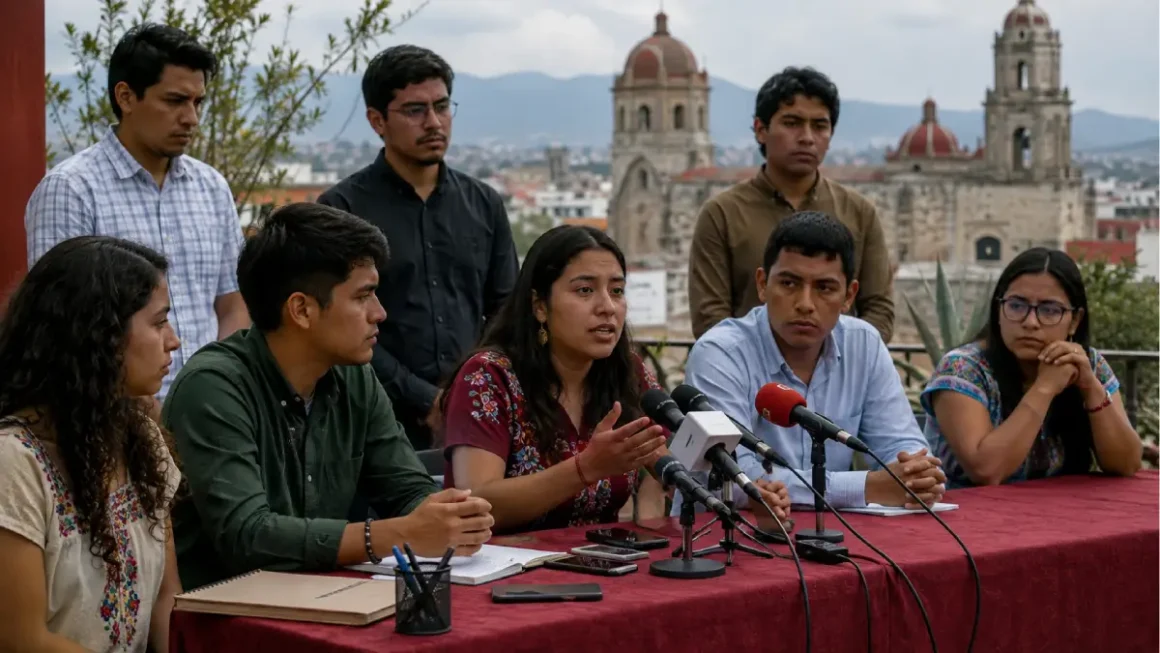
If you have searched for CostumbresMexico.com/se-presentan-jovenes-proamlo, you are likely trying to understand what the page is, what “ProAMLO” means in this context and why the article discusses a group of young people in Oaxaca. The page is an archived political and social article titled “Se presentan jóvenes ProAmlo”, published on 11 April 2020 on the website now identified on the page as Evolución México.
The length of the article is quite small, but its topic also relates to youth and politics, political organization, social movements, digital political communication and the Mexican 2018 elections.
Since the page is older, it must be taken as context for the historical time and not all statements to be read as if they are for current use.
Table of Contents
What Is CostumbresMexico.com/se-presentan-jovenes-proamlo?
CostumbresMexico.com/se-presentan-jovenes-proamlo is a webpage reporting on the presentation of a youth organisation called MOREOAX in Oaxaca.
According to the page, members of Movimiento Regional de Oaxaca, or MOREOAX, presented themselves as a new organisation in the state and expressed support for then-presidential candidate Andrés Manuel López Obrador. The article says the young members intended to organise themselves through statutes and carry out political work.
The page currently appears under the branding Evolución México: Información acerca de las costumbres y tradiciones de México and is categorised under “Mexico”.
Quick facts
| Detail | Information |
| Article title | Se presentan jóvenes ProAmlo |
| Website branding | Evolución México |
| Publication date | 11 April 2020 |
| Category | Mexico |
| Main subject | Youth political organisation |
| Organisation mentioned | MOREOAX |
| Location | Oaxaca, Mexico |
| Political figure mentioned | Andrés Manuel López Obrador |
| Main theme | Youth political participation |
| Article type | Historical news-style report |
One important point is that the article’s publication date and political wording should be considered separately. Although the page is dated 2020, its wording refers to López Obrador as a presidential candidate, which points towards an earlier political context, particularly the 2018 election period.
What Does “ProAMLO” Mean?
“ProAMLO” is generally used to describe people, organisations or political content that supports Andrés Manuel López Obrador, commonly known as AMLO.
The term itself does not necessarily identify a formal political party or legal organisation. It can simply describe a political position or affiliation.
In the article, the expression is connected to young people who publicly expressed support for López Obrador and described their organisation as a vehicle for mobilising young people.
This distinction matters because a supporter group is not automatically the same thing as a political party.
What Happened in the Article?
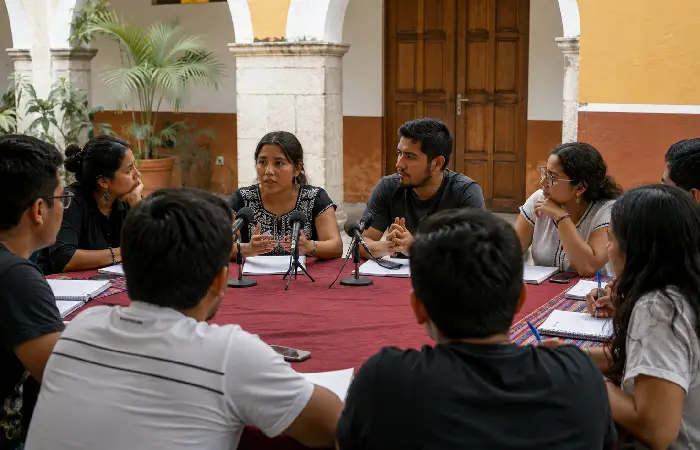
The article gives a short account of the public presentation of MOREOAX.
According to the page, members of the group:
- Presented the organisation in Oaxaca.
- Expressed support for Andrés Manuel López Obrador.
- Said they intended to work actively.
- Described themselves as organised under internal statutes.
- Discussed concerns about employment opportunities for young people.
- Said they wanted to promote political change.
- Presented MOREOAX as an organisation intended to mobilise young people.
The report is therefore primarily about political organisation and youth mobilisation, rather than being a detailed biography of López Obrador.
Who Were the Young People Mentioned?
The article describes the participants as members of Movimiento Regional de Oaxaca (MOREOAX).
However, the page provides only limited information about individual members, its leadership structure or its later development. That means readers should avoid assuming that the article provides a complete history of MOREOAX.
The article’s central point is that a group of young people was publicly presenting an organisation and expressing political support.
This is an important distinction when researching historical webpages: a short news report can document an event without providing enough evidence to reconstruct the organisation’s complete history.
Why Was Youth Political Participation Important?
Young people have historically played an important role in Mexican political campaigns and civic activities.
The Mexican electoral system has also tracked youth participation as a significant issue. The Instituto Nacional Electoral reported that approximately 65% of 18-year-olds participated in the 2018 elections, while participation among people aged 19–34 was around 55%.
That helps provide context for why youth organisations could be politically relevant.
Young people can participate in politics through:
- Voting
- Political parties
- Campaign volunteering
- Community organisations
- Student groups
- Social media
- Public demonstrations
- Civic associations
- Political content creation
The presence of a youth organisation therefore does not necessarily mean that all young people in a particular region share the same political opinion.
MOREOAX and Political Organisation
The article states that MOREOAX wanted to organise young people and had statutes that members would follow.
That suggests an attempt to move beyond informal political support towards a more structured organisation.
A basic political organisation workflow can look like this:
Step 1: Identify an Issue
Members identify an issue they believe deserves political attention.
Step 2: Form a Group
People with similar interests establish an organisation or movement.
Step 3: Establish Rules
An organisation may develop statutes, leadership arrangements and internal procedures.
Step 4: Communicate Its Position
The group publicly explains its objectives and political views.
Step 5: Mobilise Support
Members may use meetings, social networks, community activities or campaign events to reach other people.
Step 6: Participate in Public Life
The organisation can then participate in political discussions, campaigns or community activities, depending on its legal status and objectives.
The CostumbresMexico.com page appears to describe the organisation at an early stage of this process rather than documenting its entire development.
The Historical Context of AMLO’s 2018 Campaign
Understanding the background of López Obrador’s 2018 presidential campaign helps explain the article’s political references.
The INE’s official results show that López Obrador, running with the coalition Juntos Haremos Historia, received 30,113,483 votes, representing 53.19% of the presidential vote.
The official results were:
| Candidate | Coalition | Votes | Percentage |
| Andrés Manuel López Obrador | Juntos Haremos Historia | 30,113,483 | 53.19% |
| Ricardo Anaya Cortés | Por México al Frente | 12,610,120 | 22.27% |
| José Antonio Meade Kuribreña | Todos por México | 9,289,853 | 16.40% |
| Jaime Rodríguez Calderón | Independent | 2,961,732 | 5.23% |
These figures are useful for historical context only. They should not be interpreted as evidence that every youth organisation or every young voter supported López Obrador. For more related articles visit our website
Why the Article Can Be Misleading Without Context
One of the biggest issues with researching an archived webpage is that old political language can appear confusing when viewed years later.
The article is dated 11 April 2020, but its text describes López Obrador as a presidential candidate.
That creates a chronology issue worth highlighting.
The official presidential election occurred on 1 July 2018, and the INE subsequently confirmed López Obrador’s result through the district counting process.
Therefore, readers should not automatically interpret the article as describing a new presidential campaign in April 2020.
A reasonable explanation is that the page may reproduce, republish or preserve material connected to an earlier political event. However, the webpage itself does not provide enough information to establish exactly why its publication date and political wording differ.
This is an example of why publication date, event date and article context should be checked separately when researching older web content.
What Does the Page Tell Us About Mexican Political Media?

The page is also an example of how political information can circulate through smaller websites rather than only national newspapers or official government portals.
Political communication in Mexico increasingly developed through digital platforms, social networks and independent online creators during the López Obrador era.
Academic research has examined how presidential communication changed after 2018, particularly around the use of regular morning press conferences and their influence on political and media agendas.
Other reporting from the period also documented the growth of YouTube-based political creators, including channels that openly supported López Obrador.
This wider environment helps explain why archived pages about youth groups, political movements and online political communication can continue to attract search interest.
Is the Article a Reliable Current Source?
It is better treated as a historical source about what the webpage reported, rather than as a current source for political facts.
There are several reasons.
First, the page is several years old. Second, it provides only a short account of the organisation. Third, some of its political wording appears to refer to an earlier campaign period.
For current political information, readers should use official sources such as the Instituto Nacional Electoral and recent reporting from established news organisations.
For historical research, however, the page can still be useful because it records how a particular organisation and political event were presented online.
CostumbresMexico.com/se-presentan-jovenes-proamlo vs a Typical Political News Article
| Feature | Archived page | Typical current news report |
| Main purpose | Historical/event report | Current reporting |
| Length | Short | Usually more detailed |
| Political context | Historical | Current |
| Primary focus | MOREOAX youth organisation | Varies |
| Current verification | Limited | Usually updated |
| Best use | Historical reference | Current information |
| Independent context | Limited | Often broader |
| Suitable for current political claims | No | With verification |
This does not automatically make the archived article inaccurate. It simply means that its best use is contextual and historical.
Who Should Read This Page?
The article may be useful for several audiences.
Students
Students researching Mexican political history can use it as an example of online political reporting.
Researchers
Researchers examining youth mobilization may find the reference to MOREOAX useful as a starting point for further investigation.
Readers Studying Mexican Politics
Anyone researching the rise of López Obrador and the political environment around his 2018 campaign may find the page relevant.
Digital Media Researchers
The article can also help demonstrate how political information was published and preserved on smaller websites.
Who Should Not Rely on It Alone?
The page should not be the sole source for:
- Current political developments
- Current election results
- Current party membership
- Current organisational leadership
- Current political positions
- Current legal status of an organisation
Those subjects require more recent and authoritative sources.
What Can Be Learned from the Article?
The most useful takeaway is not simply that young people supported López Obrador.
The article illustrates a broader pattern: political movements can develop through local organisations that seek to connect national political figures with community-level supporters.
In this case, the article presents MOREOAX as an organisation seeking to mobilise young people in Oaxaca and connect that activity with support for López Obrador.
The wider electoral context also demonstrates that youth participation was an important component of Mexico’s political landscape. The INE’s analysis of youth participation in 2018 shows that younger voters represented a substantial part of the electorate, even though participation varied considerably by age group.
Frequently Asked Questions
What is CostumbresMexico.com/se-presentan-jovenes-proamlo?
CostumbresMexico.com/se-presentan-jovenes-proamlo is an archived webpage titled “Se presentan jóvenes ProAmlo”. It discusses the presentation of MOREOAX, a youth organisation in Oaxaca that expressed support for Andrés Manuel López Obrador.
What does ProAMLO mean in this article?
In this context, ProAMLO refers to political support for Andrés Manuel López Obrador. The article uses the term in connection with young people and an organisation supporting his political movement.
Who were MOREOAX?
According to the archived article, MOREOAX was presented as a Movimiento Regional de Oaxaca organisation that sought to organise young people and support López Obrador.
When was CostumbresMexico.com/se-presentan-jovenes-proamlo published?
The webpage is dated 11 April 2020.
Does the article describe a current political event?
No. It should be treated as an archived historical article. Its wording refers to López Obrador as a presidential candidate even though the 2018 presidential election had already taken place by the page’s stated 2020 publication date.
Did young people participate significantly in Mexico’s 2018 election?
Yes. The INE reported participation of about 65% among 18-year-olds and about 55% among those aged 19–34 in the 2018 election.
Did López Obrador win the 2018 presidential election?
Yes. Official INE results show that López Obrador received 30,113,483 votes, equivalent to 53.19% of the presidential vote.
Is CostumbresMexico.com/se-presentan-jovenes-proamlo a good source for current political information?
It is better used as a historical reference. Current political claims should be checked against recent official sources, electoral records and reputable news organisations.
Conclusion
CostumbresMexico.com/se-presentan-jovenes-proamlo is an article that is no longer active, it is archived and addresses the presentation of MOREOAX, a youth political organisation in Oaxaca that came out publically supporting Andrés Manuel López Obrador. This type of information can be useful to observe a minuscule event in the history of political, and in this case, the youth movement, of Mexico. It should always be used, however, in the appropriate historical context.
The key take-away for researchers is to compare the accounts provided in the archived article with independently available information.
For elections and voter turnout, the INE’s official account is a superior form of documentation, but the original website gives us insight into how a youth movement was communicated online.