

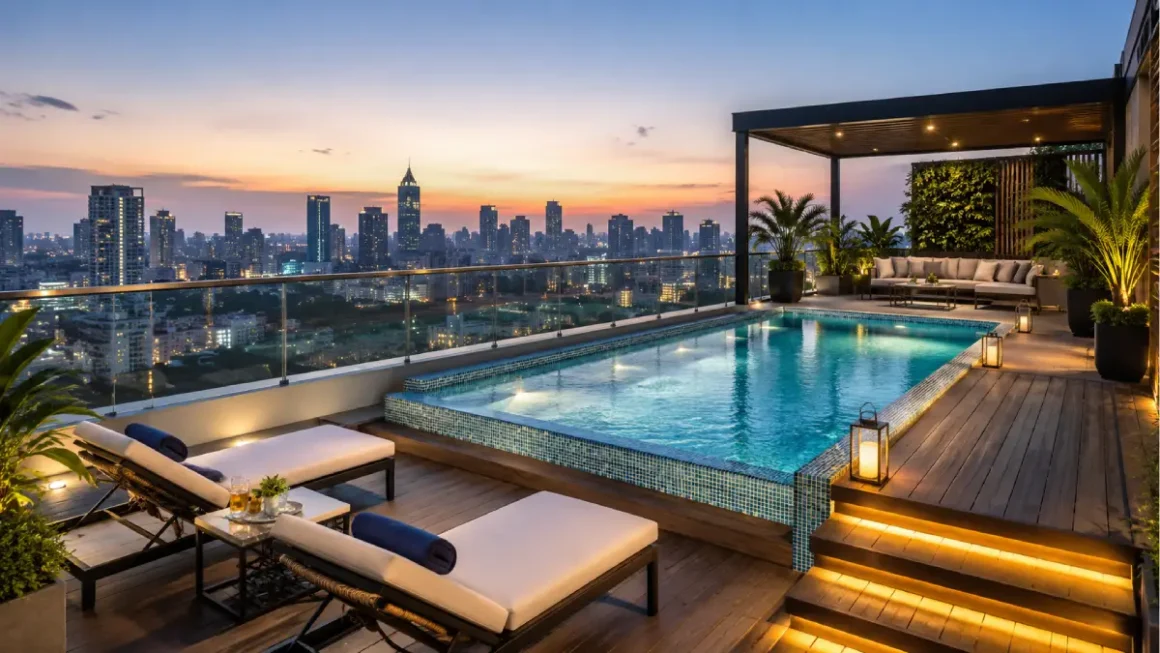
But is it possible for you to actually have a swimming pool built on your terrace? For most homeowners who fantasize of indulging in a dip to a cool refreshing water on hot summers without setting out for the place, installing the installation of the swimming pool on your terraces can be the most promising thing to do.
Increasingly, residential and commercial spaces – including modern apartment buildings, luxury penthouses, and modern and stylish hotels – feature rooftop pools to turn unused exterior areas into functional relaxation zones offering wonderful views.
But constructing a pool on your terrace or on top of the rooftop isn’t merely a matter of placing a pool on top of a flat surface, it’s an intricate engineering project that involves rigorous testing of the structure for weight, precise waterproofing measures, comprehensive drainage plans and extensive building permits along with a significant investment of resources.
As you embark on creating your rooftop oasis or even if you are simply contemplating this exciting notion of whether you can install a swimming pool on a terrace – be sure to consult this in-depth article on the basics and potential challenges before commencing.
Table of Contents
Why Terrace Swimming Pools Are Becoming Popular
Nowadays the current architecture movement strives to utilize and save every possible inch of space. Terraces can present a good compromise if a garden cannot be added to the building or the existing garden area is too restrictive, especially in urban locations where outdoor space is a luxury .
A rooftop swimming pool can provide:
- Beautiful city or landscape views
- Increased property value
- Private relaxation space
- Better use of unused terrace areas
- Luxury appeal
- Entertainment space for family and guests
For many homeowners, a terrace pool is both a lifestyle upgrade and a long-term investment.
Is It Really Possible to Build a Pool on a Terrace?
The simple answer is:
Yes—but only if the building is structurally capable of supporting the enormous weight involved.
Water is extremely heavy.
One cubic meter (1,000 litres) of water weighs approximately 1,000 kilograms (2,205 pounds).
Even a relatively small plunge pool may contain several thousand litres of water.
For example:
| Pool Size | Approximate Water Weight |
| 2m × 2m × 1m | 4,000 kg |
| 3m × 2m × 1.2m | 7,200 kg |
| 4m × 3m × 1.2m | 14,400 kg |
| 5m × 3m × 1.5m | 22,500 kg |
This weight doesn’t include:
- Concrete
- Tiles
- Steel reinforcement
- Filtration equipment
- People inside the pool
- Furniture
- Wind loads
- Dynamic movement of water
This is why professional structural assessment is essential.
Understanding Structural Load
Every building is designed to carry a maximum load.
Typical residential terraces are built for:
- Furniture
- People
- Small gardens
- Storage
They are generally not designed to hold tens of thousands of kilograms of water.
A structural engineer evaluates:
- Beam strength
- Column capacity
- Foundation strength
- Concrete quality
- Reinforcement layout
- Existing cracks
- Load distribution
Sometimes additional reinforcement can make the project possible.
In other cases, construction may not be recommended.
Types of Pools Suitable for Terraces
Not every swimming pool is suitable for rooftop installation.
1. Plunge Pool
A plunge pool is compact and designed primarily for relaxation rather than swimming.
Advantages:
- Lower weight
- Lower construction cost
- Easier maintenance
- Better for small terraces
Ideal for:
- Urban homes
- Villas
- Penthouses
2. Fiberglass Pool
Fiberglass pools are manufactured off-site and installed as a single unit.
Benefits include:
- Lightweight
- Fast installation
- Smooth finish
- Reduced leakage risk
- Lower maintenance
3. Stainless Steel Pool
Luxury properties often choose stainless steel pools.
Benefits:
- Modern appearance
- High durability
- Lightweight compared to concrete
- Corrosion resistance
4. Reinforced Concrete Pool
Concrete pools offer unlimited customization.
Advantages:
- Custom size
- Custom depth
- Luxury design
- Infinity edges
- Integrated seating
- Waterfalls
Disadvantages:
- Heavy
- Longer construction time
- Higher cost
- Greater structural requirements
5. Above-Ground Modular Pools
Some homeowners install modular or prefabricated pools.
Benefits include:
- Lower cost
- Easier installation
- Less permanent
- Faster setup
These are often suitable where structural capacity is limited, though professional evaluation is still recommended.
Waterproofing Is One of the Most Critical Steps
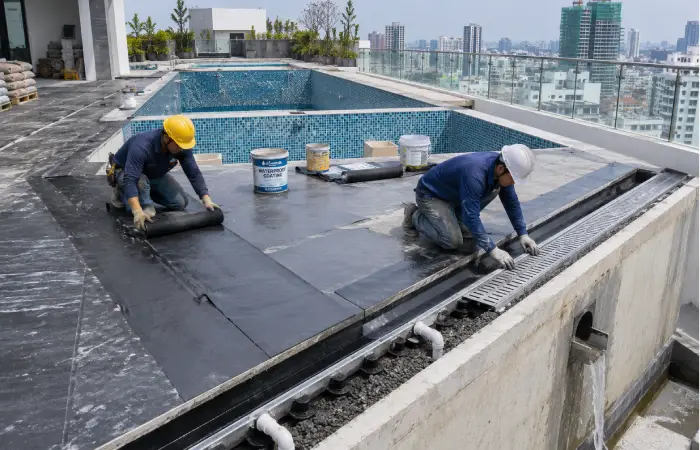
A swimming pool continuously holds water, making waterproofing one of the most important aspects of the project. Even a small leak can cause significant damage to the terrace slab and the rooms below.
A proper waterproofing system generally includes:
- Waterproof membrane
- Protective screed
- Drainage layer
- Waterproof concrete
- Expansion joints
- High-quality sealants
Hiring experienced waterproofing professionals is essential because repairing leaks after construction is usually far more expensive than installing the system correctly from the start.
Drainage System Requirements
Rainwater and pool overflow water need to be managed efficiently.
Without proper drainage, water may accumulate on the terrace, leading to:
- Structural deterioration
- Mold growth
- Slippery surfaces
- Water seepage
- Damage to ceilings below
A well-designed drainage system typically includes:
- Overflow channels
- Floor drains
- Drainage pipes
- Emergency overflow outlets
- Proper slope toward drains
These features help keep the terrace safe and extend the life of both the pool and the building.
Pool Filtration and Plumbing
A terrace pool requires the same basic equipment as a ground-level pool.
Essential components include:
- Water pump
- Sand or cartridge filter
- Return jets
- Skimmer
- Drain outlet
- Chlorination or saltwater system
- Plumbing pipes
- Electrical control panel
Many homeowners install the equipment room beneath the terrace or within a dedicated service cabinet to save space and reduce noise.
Electrical Safety Considerations
Since water and electricity are a dangerous combination, electrical work must follow local building codes and safety standards.
Important safety measures include:
- Ground fault protection
- Waterproof electrical fixtures
- Proper grounding
- Outdoor-rated wiring
- Safe placement of switches and outlets
- Professional installation
Never attempt DIY electrical work around a swimming pool.
Do You Need Building Permits?
In many locations, constructing a swimming pool on a terrace requires official approval before work begins.
Depending on local regulations, you may need:
- Building permit
- Structural engineering report
- Architectural drawings
- Plumbing approval
- Electrical approval
- Homeowners’ association (HOA) permission, if applicable
Failing to obtain the necessary permits can result in fines, project delays, or even removal of the pool. Always check with your local municipal authority before starting construction.
Safety Features Every Terrace Pool Should Have
Safety should never be overlooked, especially in elevated installations.
Consider including the following:
- Anti-slip flooring
- Glass or metal safety railings
- Pool covers
- Safety alarms
- Child-proof access gates
- Emergency ladders
- Adequate lighting
- Clearly marked pool depth
These features help reduce the risk of accidents while enhancing usability.
Infinity Pools on Rooftops
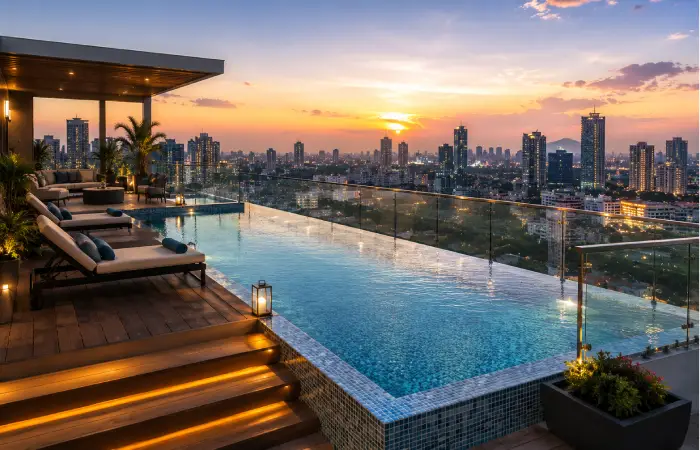
Infinity pools are among the most luxurious terrace pool designs. Their vanishing-edge effect creates the illusion that the water extends into the horizon.
Benefits include:
- Stunning visual appeal
- Premium property value
- Modern architectural design
- Excellent panoramic views
However, infinity pools require:
- Advanced structural engineering
- Overflow collection tanks
- More complex plumbing
- Higher construction costs
- Regular maintenance
Because of their technical complexity, they are generally recommended for new construction or buildings specifically designed to support them.
How Much Does It Cost to Build a Terrace Swimming Pool?
The overall cost depends on factors such as pool size, materials, location, labor rates, and engineering requirements.
Typical cost factors include:
| Expense | Estimated Share of Budget |
| Structural assessment | 5–10% |
| Engineering and design | 10–15% |
| Pool construction | 35–45% |
| Waterproofing | 10–15% |
| Plumbing and filtration | 10–15% |
| Finishing and landscaping | 10–20% |
Additional costs may include:
- Building permits
- Crane rental (for prefabricated pools)
- Reinforcement of the terrace
- Premium tiles and finishes
- Heating systems
- LED lighting
- Automated pool controls
Request quotes from multiple contractors and compare both price and experience before making a decision.
Benefits of Building a Pool on a Terrace
A well-designed terrace pool offers several advantages:
Makes Better Use of Space
Urban homes often have limited outdoor areas. A rooftop pool transforms unused terrace space into a functional and enjoyable living area.
Increases Property Value
Luxury features such as rooftop pools can enhance the market appeal of a property, particularly in premium residential locations.
Improved Privacy
Compared with ground-level pools, terrace pools generally offer greater privacy from neighbors and passersby.
Attractive Views
Swimming while enjoying city skylines, mountains, or ocean views can create a unique experience that ground-level pools cannot always provide.
Entertainment
A terrace pool can become the centerpiece for family gatherings, celebrations, and social events.
Potential Drawbacks
Despite their appeal, terrace pools also have some disadvantages.
Higher Construction Costs
Engineering, waterproofing, and reinforcement requirements can significantly increase the overall budget.
Weight Restrictions
Not every building can safely support a pool. Structural limitations may prevent installation or require costly upgrades.
Ongoing Maintenance
Like any swimming pool, terrace pools need regular cleaning, water treatment, equipment servicing, and inspections.
Risk of Water Damage
Poor waterproofing or plumbing failures can lead to expensive repairs if leaks develop.
Common Mistakes to Avoid
Avoiding these common errors can save time and money:
- Skipping the structural assessment
- Choosing contractors without rooftop pool experience
- Using low-quality waterproofing materials
- Ignoring drainage design
- Underestimating maintenance costs
- Overloading the terrace with heavy furniture and landscaping
- Failing to obtain permits
- Neglecting routine inspections after installation
Proper planning is the key to a successful project.
Maintenance Tips for Terrace Pools
To keep your terrace pool in excellent condition:
- Test water chemistry regularly.
- Clean filters according to the manufacturer’s schedule.
- Remove leaves and debris frequently.
- Inspect waterproofing and seals annually.
- Check pumps and plumbing for leaks.
- Maintain the correct water level.
- Cover the pool when not in use to reduce evaporation and contamination.
- Schedule professional servicing at least once a year.
Routine maintenance helps extend the life of the pool and reduces the likelihood of expensive repairs.
Frequently Asked Questions (FAQs)
Can every terrace support a swimming pool?
No. A structural engineer must determine whether the terrace can safely handle the combined weight of the pool, water, equipment, and occupants.
What is the best type of pool for a terrace?
Fiberglass pools, plunge pools and small lightweight modular pool structures often a good fit as the load on a swimming pool structure is higher than for a small concrete structure.
Is waterproofing necessary?
Yes, Proper water proofing will prevent in the building from leaks so the in building life is increase.
Do terrace pools require more maintenance?
Maintenance typically follows same patterns as pools on ground-level, however rooftop pools may necessitate increased inspection of equipment and drainage and waterproofing system.
Can I install a hot tub instead of a swimming pool?
Yes, in some instances. While you probably won’t need as many supplies as you’d require for a typical swimming pool, a Jacuzzi or other type of hot tub still does carry a rather substantial body of water. Installation still does requires consideration of any building inspection guidelines.
Final Thoughts
Transform an unused rooftop area into the ultimate, practical luxury pool with a terrace swimming pool-an ambitious yet achievable undertaking. However, constructing an outdoor pool in such a place requires an engineer, sound waterproofing and knowledgeable contractors as well as all required building codes to be implemented. It is crucial to get the terrace checked by an engineer prior to having the pool constructed-this must be done so that you can assure yourself that the terrace is capable of holding the extra weight.
Professional workmanship, long-lasting materials as well as maintenance will ensure an ideal rooftop pool which can add character for a lifetime.
A pool which becomes the envy of any neighboring house may truly provide an extraordinary advantage to the property.