

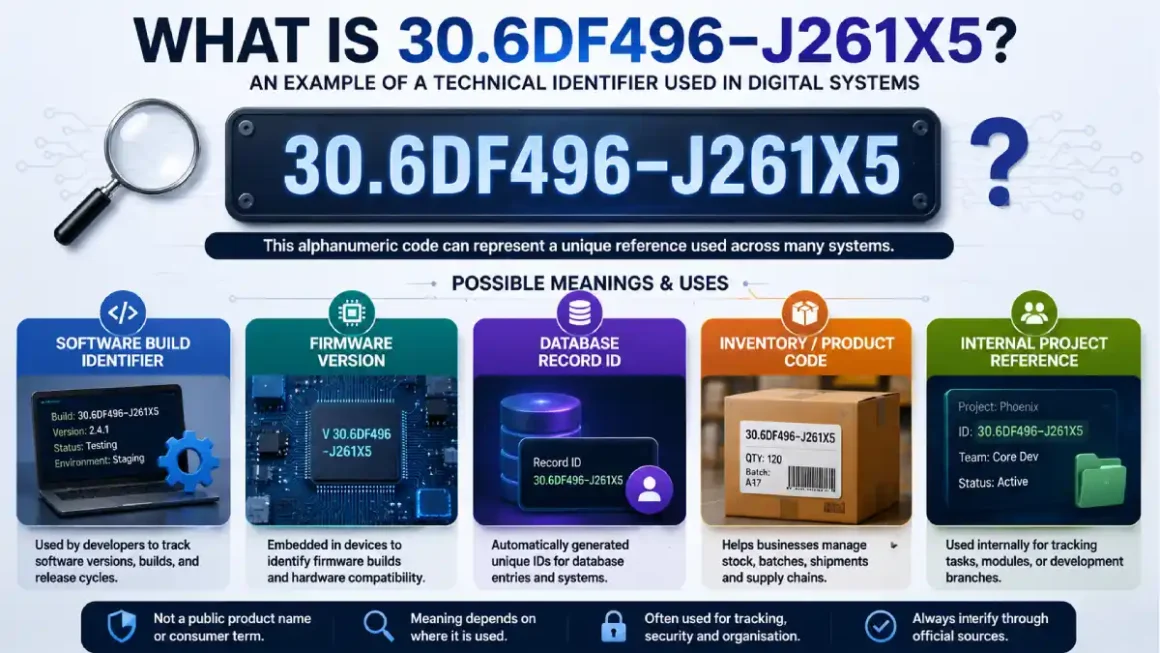
You are likely trying to figure out whether this string represents a software version, product model, tracking number or other unique identifier, having Googled ‘What is 30.6df496-j261x5?’. There are no standard publicly documented products with the name ‘30.6df496-j261x5’, though this does not mean it is not a real one – just that it is perhaps an identifier in some private software, network, or hardware. This post details exactly what ‘30.6df496-j261x5’ may refer to, how similar identifiers are used in practice, and methods of authenticating whether ‘30.6df496-j261x5’ refers to something real and useful before downloading an application, purchasing hardware, or divulging any personal information.
Table of Contents
Definition
An alphanumeric sequence that resembles a software build version, database ID or product catalog number, the identifier 30.6df496-j261x5 currently doesn’t have any openly confirmed usage for. Until context for this sequence is provided it is considered an unclassified identifier.
What Is 30.6df496–j261x5?
The structure of the code suggests it is not intended for everyday consumers.
Instead, identifiers like this are commonly generated automatically by software systems.
Possible examples include:
- Software build numbers
- Firmware versions
- Internal database IDs
- Manufacturing batch numbers
- Product serial references
- Testing environment identifiers
- Asset management labels
Without knowing where the code appeared, it is impossible to determine its exact purpose.
Possible Meanings of 30.6df496–j261x5
Several explanations are plausible.
1. Software Version Identifier
Developers frequently assign unique version identifiers to software builds.
Example:
- Development releases
- Beta versions
- Internal testing builds
- Debug versions
Such identifiers help engineers distinguish one release from another.
2. Database Record
Large databases often generate automatically assigned identifiers.
These references may never appear in public documentation.
3. Inventory Code
Warehouses and manufacturers commonly use structured product codes for:
- Stock management
- Production batches
- Component tracking
- Logistics
4. Firmware Build
Embedded devices such as routers, printers and IoT hardware frequently include firmware identifiers that resemble this format.
5. Internal Development Project
Many software teams use randomised identifiers for:
- Testing
- Continuous integration
- Build pipelines
- Feature branches
Key Characteristics
| Feature | Observation |
| Format | Alphanumeric identifier |
| Public documentation | Not currently verified |
| Consumer recognition | Very limited |
| Possible usage | Technical reference |
| Likely audience | Developers, IT teams, manufacturers |
| Human-readable | No |
Where Might You Encounter 30.6df496–j261x5?
You may find similar identifiers in:
- Software installation folders
- Error logs
- Device firmware
- Configuration files
- Cloud platforms
- Database exports
- Inventory systems
- Shipping labels
- API responses
Context is essential for understanding the code.
How to Identify Unknown Technical Codes
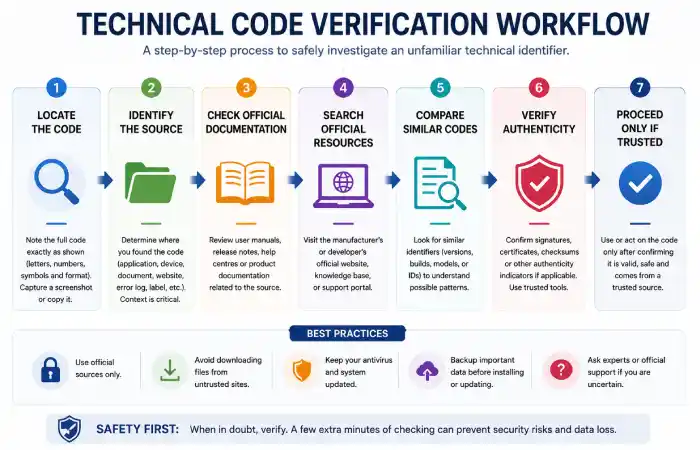
When you discover an unfamiliar identifier, follow a structured verification process.
Workflow
Locate the Code
↓
Identify the Source
↓
Check Official Documentation
↓
Search Manufacturer Resources
↓
Compare Similar Codes
↓
Verify Authenticity
↓
Proceed Only if Trusted
This approach helps reduce the risk of acting on misleading or malicious information.
Performance Expectations
Many people expect that searching an unusual code online will immediately reveal its meaning.
In reality:
- Some identifiers are private.
- Internal codes may never be indexed by search engines.
- Manufacturers often do not publish every build number.
- Temporary testing references may disappear after development.
Therefore, a lack of search results does not automatically indicate that a code is invalid.
Comparison: Public Product Names vs Internal Identifiers
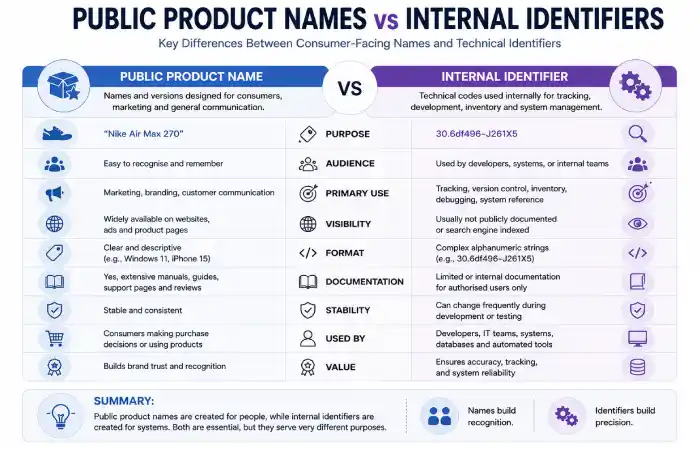
| Feature | Public Product Name | Internal Identifier |
| Easy to recognise | Yes | Usually no |
| Marketing name | Yes | No |
| Documentation | Widely available | Often limited |
| Used by consumers | Frequently | Rarely |
| Technical tracking | Limited | Primary purpose |
| Search visibility | High | Often low |
Could It Be a Software Version?
Yes, it is possible.
Many software development teams create version numbers that include:
- Letters
- Numbers
- Build hashes
- Commit identifiers
- Environment tags
These help developers reproduce software builds during testing.
Could It Be a Product Number?
Manufacturers frequently assign unique identifiers to products for:
- Warranty registration
- Inventory
- Repairs
- Manufacturing
- Distribution
Without additional context, however, there is no evidence that 30.6df496–j261x5 corresponds to a specific commercial product.
Legitimacy Considerations
Currently, there is no publicly verified evidence that 30.6df496–j261x5 represents:
- A recognised software release
- A consumer product
- A registered standard
- A malware family
- A public security identifier
That means the code should be treated neutrally rather than assumed to be either genuine or suspicious.
Always evaluate it based on where you encountered it.
Safety Tips Before Using Unknown Codes
If you encounter this identifier while downloading software or installing firmware:
- Download only from official sources.
- Verify digital signatures where available.
- Scan files using reputable antivirus software.
- Avoid unofficial download websites.
- Confirm documentation from the original developer.
- Keep system backups before updating firmware.
Pros and Limitations of Alphanumeric Identifiers
Advantages
- Unique identification
- Easier software tracking
- Improved inventory management
- Better version control
- Supports debugging
Limitations
- Difficult for users to understand
- Limited public documentation
- Easy to confuse with similar codes
- Context is required
Who Should Investigate Further?
This identifier may be relevant if you are:
- An IT administrator
- Software developer
- Cybersecurity analyst
- Network engineer
- Database administrator
- Technical support professional
For general consumers, the code is unlikely to have standalone meaning without additional context.
Who Can Usually Ignore It?
Most everyday users do not need to investigate random technical identifiers unless they:
- Appear in an error message
- Are associated with a software installation
- Relate to a purchased product
- Are referenced in technical documentation
Alternatives for Finding Its Meaning
If standard web searches are unsuccessful, try:
- Official manufacturer documentation
- Product manuals
- Software release notes
- Technical support forums
- Developer documentation
- Git repositories (if software-related)
- Device support pages
Always verify that the source is legitimate before relying on the information.
Buying or Download Tips
If 30.6df496–j261x5 appears alongside software or hardware:
- Verify the seller or developer.
- Check official documentation.
- Confirm compatibility with your device.
- Avoid modified installers.
- Read release notes.
- Compare version numbers carefully.
Expectations Management
Searching for unusual identifiers often produces little or no information.
This is normal because many codes are:
- Automatically generated
- Temporary
- Internal
- Organisation-specific
- Never intended for public use
Until an official source explains the identifier, any interpretation remains speculative.
FAQ’s
What is 30.6df496–j261x5?
It appears to be an unidentified alphanumeric reference that may represent a software build, inventory code, firmware version, or database identifier. There is currently no publicly verified explanation.
Is 30.6df496–j261x5 a product?
No publicly available evidence confirms that it is a commercial product name.
Is 30.6df496–j261x5 malware?
There is no verified evidence showing that this identifier is associated with malware. Its meaning depends on where it was encountered.
Why can’t I find information about 30.6df496–j261x5?
Many technical identifiers are private, temporary, or organisation-specific, so they may never appear in public search results.
Should I trust software labelled with 30.6df496–j261x5?
Only if it comes from an official, trusted source and can be verified through documentation or digital signatures.
Conclusion
If you’re wondering what is 30.6df496–j261x5, the most accurate answer is that it appears to be an unverified technical identifier rather than a recognised consumer product or public standard. It could relate to software development, firmware, inventory management, or internal database systems, but there is currently no authoritative documentation confirming its exact purpose.
Whenever you encounter unfamiliar identifiers, rely on official documentation, trusted vendors, and verified sources rather than assumptions. Context is the key to determining what an identifier like 30.6df496–j261x5 actually represents.